

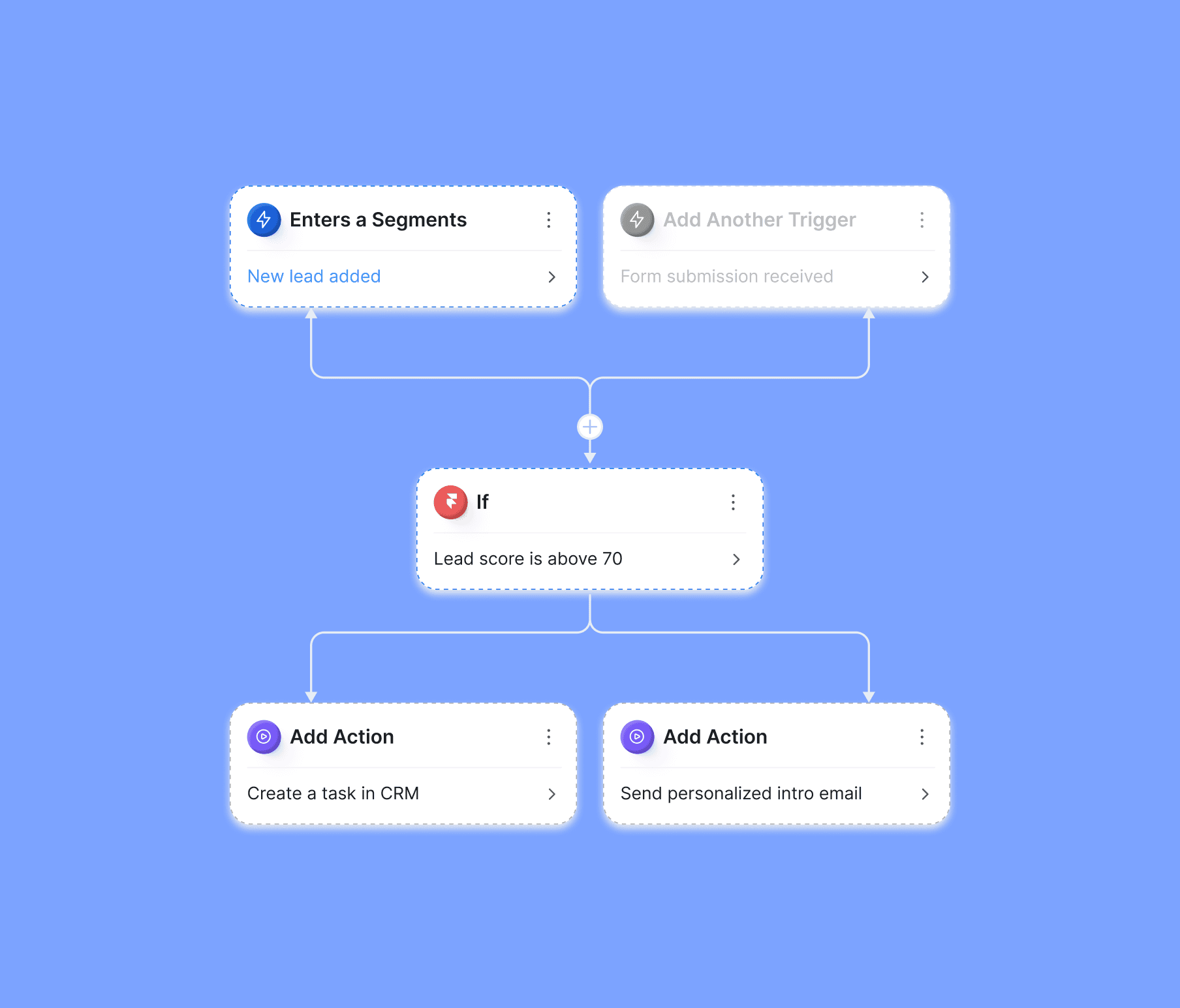
Manually updating data across tools
Copy-pasting data between tools is one of the biggest hidden time-wasters. Whether it’s updating a CRM, syncing spreadsheets, or logging activity, this work is highly repetitive, manual, and error-prone, and time-consuming.
AI-powered workflows can automatically sync and update data across systems in real time ensuring accuracy without constant manual effort and human intervention.
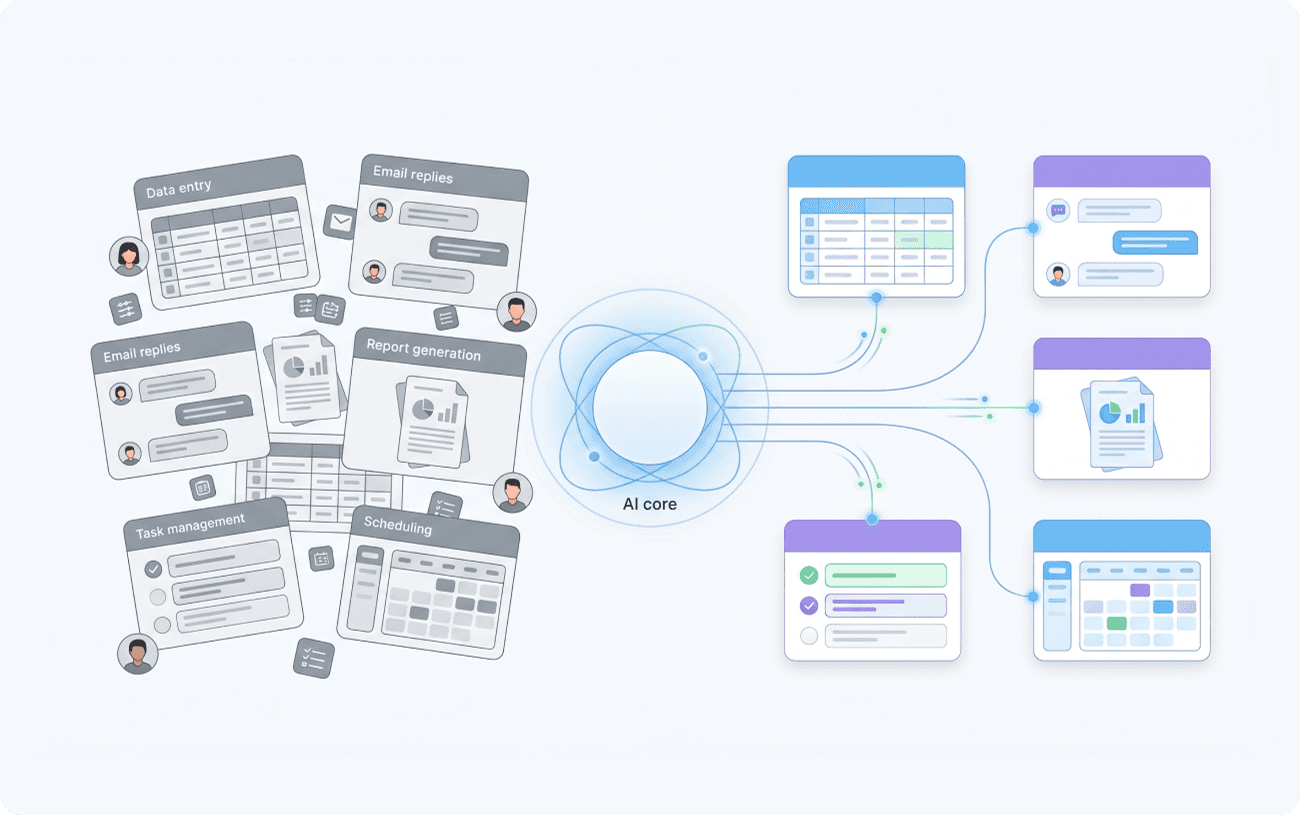
Sending repetitive follow-ups
Teams spend hours sending the same follow-up messages reminders, status updates, confirmations over and over again.
With AI, follow-ups can be triggered automatically based on actions, time delays, or user behavior. This keeps communication consistent without relying on someone to remember every step.
Assigning and routing tasks manually slows significantly
Manually deciding who should handle each task slows everything down especially as teams grow and scale rapidly.
AI can automatically assign and route tasks based on rules, workload, or priority. This ensures work reaches the right person without bottlenecks or unnecessary delays in workflows across teams and complex operational systems.
Tracking progress across scattered disconnected systems
Many teams rely on manually checking multiple tools to understand what’s happening jumping between dashboards, inboxes, and spreadsheets without a unified real-time view or centralized source of truth.
AI can centralize and track progress automatically, giving teams real-time visibility and insights without constant monitoring.
Creating reports and summaries
Generating reports often involves collecting data, organizing it, and summarizing insights manually. It’s time-consuming and often outdated by the time it’s done.
AI can generate real-time reports and summaries instantly highlighting key insights, trends, and actions without manual input.
Stop doing work that machines handle better
Manual tasks don’t just waste time they limit your team’s ability to focus on meaningful, high-impact work. As AI takes over repetitive execution, teams can shift their attention to strategy, creativity, and decision-making.
The goal isn’t to replace people it’s to remove the work that doesn’t need them.
Teams that eliminate these tasks move faster, operate more efficiently, and scale without unnecessary complexity.