

Traditional processes rely on rigid manual sequential steps
Classic workflows are built on fixed sequences. Each step depends on the previous one, and progress often slows down when something breaks or gets delayed.
This approach works for predictable tasks but struggles in dynamic environments where decisions need to happen quickly. As complexity grows, these processes become harder to manage and maintain.
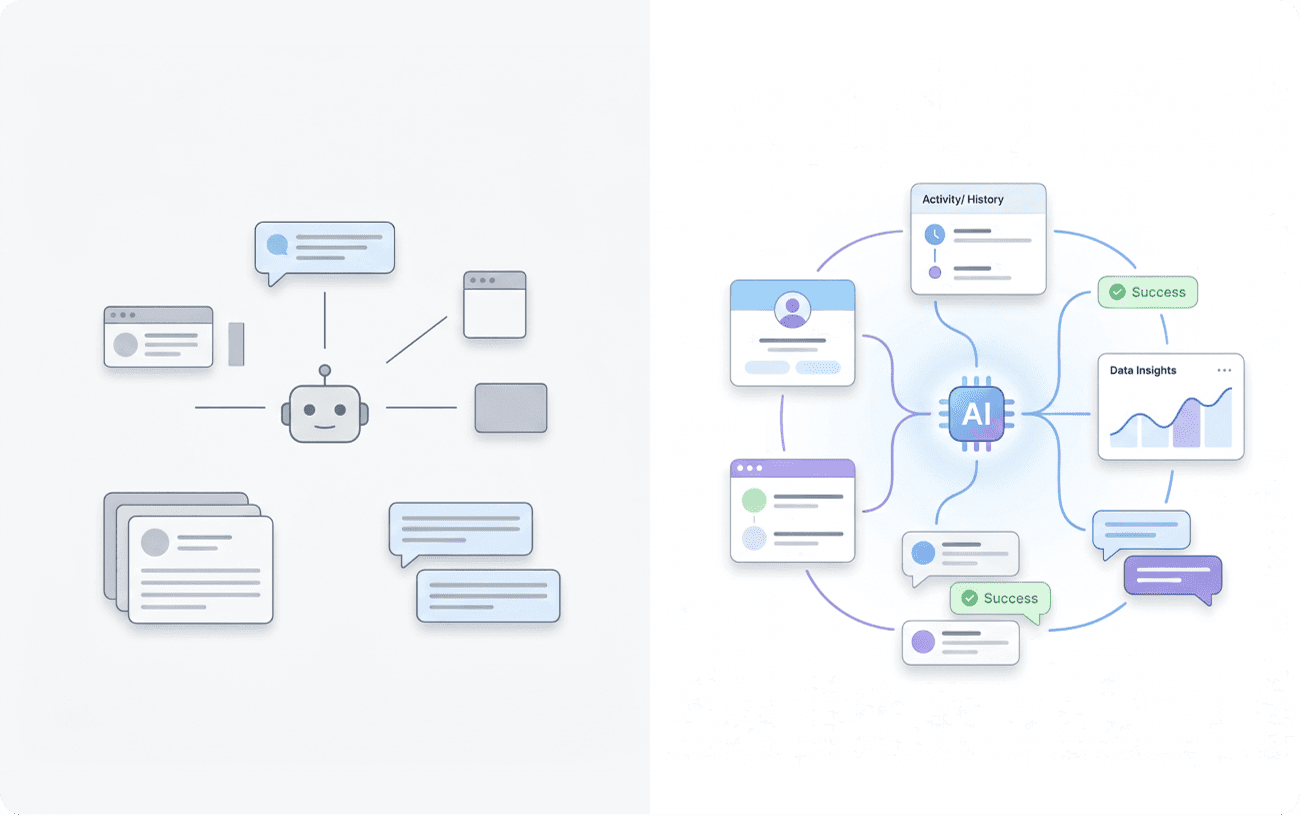
Smart AI intelligently adapts instead of strictly following rules
AI-driven workflows don’t just follow instructions they interpret context and make decisions based on data and evolving business conditions.
Instead of asking “what’s the next step” smart systems evaluate:
What needs attention right now
What action will create the best outcome
How to adjust based on new inputs
This shift from static rules to dynamic, real-time execution is what makes AI truly fundamentally different overall.
From manual handoffs to seamless continuous flow
In traditional systems, work moves between people, tools, and departments. Each handoff creates a delay and increases the chance of errors or miscommunication.
AI removes many of these gaps by enabling continuous workflows. Tasks can move forward automatically, without waiting for manual triggers or approvals at every step.
The result is faster execution with fewer interruptions and improved overall efficiency.
Decision-making moves closer to the core system layer
Classic processes require humans to make most decisions reviewing data, choosing actions, and triggering the next step.
With AI, decision-making becomes seamlessly embedded within the workflow itself. Systems can prioritize tasks, route work, and take action based on defined logic and real-time data.
Teams don’t lose control they gain leverage by focusing only where human judgment is truly needed and most impactful.
Flexibility replaces process rigidity
Traditional workflows are difficult to change. Even small updates can require restructuring systems, retraining teams, or rewriting rules.
AI-powered workflows are more flexible by design. They can evolve with changing conditions, new data, and shifting priorities without breaking the entire system.
This makes teams more responsive and better equipped to handle growth.
The future of work is not process-driven it’s intelligence-driven
Classic processes were built for control and predictability. Smart AI workflows are built for speed, adaptability, and scale.
The shift isn’t just about automation it’s about how work gets done at its core. Teams that embrace modern workflows operate faster, make decisions, and stay aligned even as complexity increases at scale efficiently.
That’s the difference between managing processes and building systems that think.